
Micro-hospitality: the small, strategic touches that guests remember
In a crowded hospitality market, competing solely on room size or amenities can become an expensive arms race. A more creative (and often higher-ROI) approach is micro-hospitality: small, intentional upgrades to the guest experience that reduce friction, signal care, and create repeatable “wow” moments—without a full property overhaul.
Below are nine micro-hospitality upgrades hotels, B&Bs, serviced apartments, hostels, and even restaurants with rooms can implement quickly. Each item includes practical steps, realistic examples, and measurable ways to track impact.
1) Create a “24-Hour Arrival” flow (because guests don’t arrive on your schedule)
Why it’s trending: Late flights, remote work, and flexible travel mean arrivals are less predictable. A seamless after-hours experience reduces stress and negative reviews.
Actionable upgrade:
- Offer at least one self-serve check-in option (digital key, lockbox, or keypad) for late arrivals.
- Send a single message that covers: door access, Wi-Fi, breakfast hours, parking, and who to contact—written for someone tired and jet-lagged.
- Provide a “late landing kit” at reception or in-room: water, a small snack, and clear instructions for nearby late-night food.
Real-world example: Many city properties now include “arrival playlists” in pre-arrival emails (a short list of open eateries + estimated walk time). It’s cheap to create and dramatically lowers “Where can I eat right now?” calls.
How to measure: Track after-hours call volume and the number of check-in related complaints in reviews before/after implementation.
2) Install a “comfort bar” instead of guessing what guests forgot
Why it works: Guests don’t mind paying a little for convenience; they resent feeling unprepared. A comfort bar turns small emergencies into relief.
Actionable upgrade:
- Curate a small in-room or lobby “comfort bar”: stain remover wipes, blister plasters, sewing kit, earplugs, phone chargers, hair ties, travel-size deodorant.
- Keep pricing fair and transparent; the goal is trust, not margin.
- Include a free option (e.g., earplugs or a basic toothbrush) to build goodwill.
Operational tip: Put high-demand items (chargers, blister plasters) in a clearly labeled container so staff can restock in under 60 seconds during room turns.
How to measure: Monitor front desk “forgotten item” requests and note reductions. In many properties, these requests spike on weekends and event dates—prime opportunities for impact.
3) Design a “silent room” protocol for light sleepers
Why it’s specific and valuable: Noise complaints are among the most common review triggers. Not every property can renovate for soundproofing, but you can offer a credible alternative.
Actionable upgrade:
- Tag certain rooms as “silent preference” in your PMS: away from lifts/ice machines, top floors where possible, courtyard-facing, etc.
- Stock those rooms with: high-quality earplugs, a white-noise option (device or QR to a curated playlist), and door draft stoppers where appropriate.
- Add a pre-arrival question: “Do you prefer quiet, view, or proximity to facilities?” Then honor it when you can.
Example script for confirmation email: “If sleep is a priority, reply with ‘quiet’ and we’ll assign our calmest available room.”
How to measure: Track noise-related reviews and compensation incidents. Even a small reduction improves profitability and staff stress.
4) Offer “hyperlocal hydration” (it’s not about water, it’s about belonging)
Why it’s creative: Guests increasingly want experiences that feel rooted in place. A generic welcome bottle is forgettable; a locally tied hydration ritual is share-worthy.
Actionable upgrade:
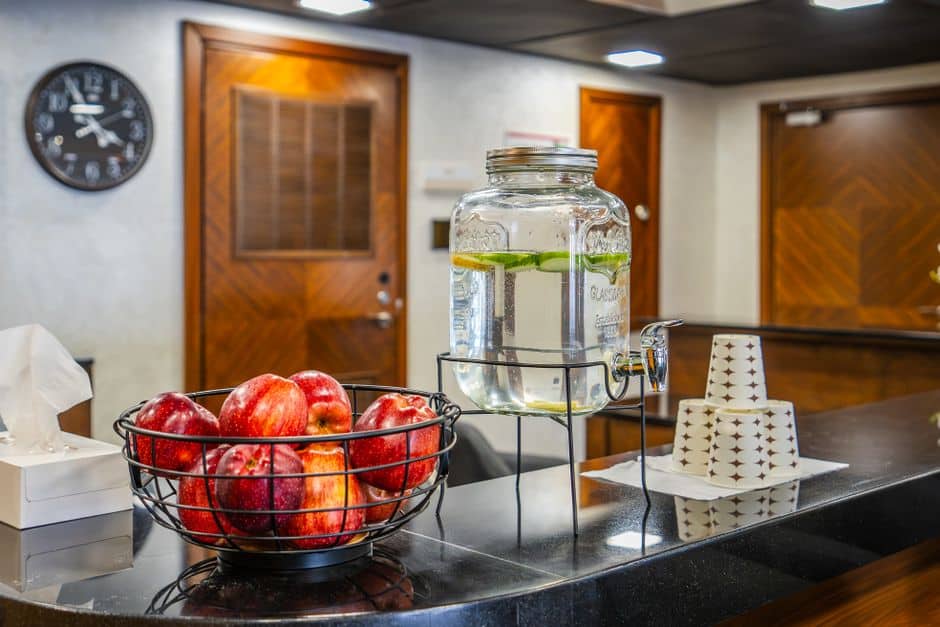
- Replace standard bottled water with a refillable carafe and a clearly signposted water station (filtered, chilled, sparkling if possible).
- Add a rotating local element: regional herbal tea sachets, a small card explaining the local water source, or a seasonal infused-water option in the lobby.
- Communicate the sustainability angle honestly—no guilt, just clarity.
Data point angle: Properties that shift from single-use bottles to refill stations often reduce waste and recurring supply costs. If you want broader context on the scale of plastics and waste issues that influence traveler expectations, reporting from The Guardian can be a useful resource to share internally when aligning teams on sustainability decisions.
How to measure: Count bottles avoided (or refills logged), track guest mentions of “eco” or “sustainable” in reviews, and monitor minibar/water supply spending month-over-month.
5) Make “work-from-anywhere” actually work: micro-office readiness in every room
Why it’s evergreen now: Business travel is evolving; leisure guests also bring laptops. A room that supports work reduces complaints and increases midweek occupancy appeal.
Actionable upgrade:
- Add two things to every room: a proper task light and at least one easy-reach power outlet (or a high-quality extension with USB-C).
- Provide a “Wi-Fi in one line” card: network name, password, and a QR code for quick connection.
- Offer a loanable kit: laptop stand, external keyboard, and HDMI cable (kept at reception).
Real-world example: Some boutique hotels position a small “desk caddy” with a notepad, pen, and cable tie—tiny cost, big perceived readiness.
How to measure: Track Wi-Fi related tickets, “desk/chair” complaints, and midweek booking conversions after updating your room description to highlight work-friendly features.
6) Build a “two-minute fix” housekeeping checklist to prevent the most common review killers
Why it’s high ROI: Many negative reviews come from small maintenance issues: wobbly handles, low water pressure, stained grout lines, flickering bulbs. A micro-checklist catches issues before guests do.
Actionable upgrade:
- Create a housekeeping add-on checklist that takes two minutes: test TV remote, check shower temperature, check drain speed, confirm bedside lights, confirm curtains close fully.
- Give staff permission to log a fix instantly via a QR code form (date, room, issue).
- Hold a 10-minute weekly “top 5 issues” huddle: what’s recurring and why?
Operational tip: The goal isn’t perfection; it’s consistency. Two minutes per room is scalable and protects your review score.
How to measure: Track maintenance tickets by category and compare review mentions before/after (especially “clean,” “broken,” “old,” “smell”).
7) Replace generic recommendations with a “choose-your-mood” local guide
Why it stands out: Guests can find “top restaurants” anywhere. They value curation that feels like a friend’s advice—especially when it’s tailored to a mood.
Actionable upgrade:
- Create a one-page guide divided into moods: “Cozy & Quiet,” “Quick & Delicious,” “Celebration,” “Rainy Day,” “Solo Dining,” “Kid-friendly,” “Late-night.”
- Add 1–2 lines for each recommendation: what to order, best time to go, and if booking is needed.
- Include accessibility notes: steps/no steps, noise level, and distance.
Real-world example: A small coastal inn might recommend: “Windy evening: fish chowder + window seat at X, arrive before 6 pm to avoid a queue.” That specificity feels human—and gets shared.
How to measure: Add a tiny prompt: “Did you try one of our picks?” via QR survey; measure engagement and track guest mentions in reviews.
8) Add a “micro-celebration” option at booking (and systemize delivery)
Why it’s specific: Birthdays, anniversaries, proposals, and reunions drive travel. Guests often want a small moment, not a luxury package.
Actionable upgrade:
- Add low-friction add-ons: a handwritten card, a small dessert, a mini bouquet, or a locally made treat.
- Use a simple rule: all micro-celebrations are delivered by a set time (e.g., 5 pm) so housekeeping and front desk can plan.
- Offer one budget-friendly option and one premium option—clear inclusions, no surprises.
Operational tip: Create a “celebration kit” in storage: blank cards, envelopes, ribbon, and a list of local suppliers with lead times.
How to measure: Track attach rate (percentage of bookings with add-ons) and whether celebratory stays have higher review scores or return rates.
9) Train one “recovery move” per department for service slips (so problems don’t become reviews)
Why it’s essential: Mistakes happen. What guests remember is speed, clarity, and fairness. A simple recovery playbook empowers staff and protects ratings.
Actionable upgrade:
- Front desk: one-step resolution for common issues (room change options, late check-out guidelines, transport help).
- Housekeeping: a “reset priority” pathway—when a guest reports a cleanliness issue, the fix is immediate, not queued.
- F&B: a fast “make it right” approach for delayed orders (clear time estimate + small peace offering).
Practical script: “Thank you for telling us. Here’s what I can do in the next 10 minutes, and here’s what I’ll do after that. Does that work for you?”
How to measure: Track time-to-resolution and the percentage of issues solved without compensation. Often, clear communication reduces the need for discounts.
Conclusion: micro-hospitality is a compounding advantage
The most memorable hospitality experiences aren’t always the most expensive—they’re the most considerate. Micro-hospitality upgrades work because they focus on how guests actually move through a stay: arriving tired, needing clarity, wanting comfort, seeking local connection, and expecting quick recovery when something goes wrong.
Choose two or three upgrades to start, attach a simple metric to each (calls avoided, complaints reduced, add-on attach rate, review mentions), and refine monthly. Over time, these small improvements compound into a brand reputation that feels personal, modern, and genuinely welcoming—no renovation required.